
We were very sad to hear of the death of our beloved colleague, Dr Sarah Fitzgibbon, MWIA Vice President of the Northern Europe region. She founded WiMIN (Women in Medicine in Ireland Network) after being diagnosed with Stage 4 bowel cancer and rapidly built up the membership to over 800 doctors. Her courage and enterprise were an inspiration.
The MWF Spring Conference 2026 took place on Friday 8th May 2026. Guests were able to network the evening before at the formal dinner in St Mary's Guildhall.
A conference report - Glory Matonga, Medical Student
My honest opinion? Attending the Medical Women's Federation Spring Conference 2026 at Coventry University was, honestly, such an amazing time. The theme of 'Women as Leaders' in itself was thought-provoking, felt timely, personal, considering women now make up the majority of the medical workforce /healthcare staff but have a slither of space at the managerial table in comparison. I came from the conference with a lot to think about, some amazing connections and a fair bit of renewed motivation too.
The day kicked off with Professor Bola Owolabi CBE's talk on women and career progression, drawing on the Lean in framework. What struck me most was how she wove together her own remarkable journey from NHS England to the Care Quality Commission and drawing insight from her coaching experiences, to enlighten us on even mental barriers that can hold women back. She made the point of the importance of impact in the influence and sphere of contact that resonated with me.
I attended the coaching workshop run by Dr Kate Jolowicz during the morning session, which was a great introduction to coaching and has given me tools I've already started thinking back on and looking to apply.
The oral abstract presentations in the afternoon were a highlight of the conference for me. Dr Sarb Clare MBE's talk 'Say My Name' was informative, including the data she presented about how frequently female doctors are addressed without their titles, compared to male colleagues.
The Dame Hilda Rose Memorial Lecture, delivered by Professor Kamila Hawthorne MBE, was the perfect note to end the clinical sessions on. Her reflections on differential attainment in high-stakes clinical exams brought together issues of language, culture and systemic bias in a really accessible way. As someone interested in medical education, I found this relevant to my own practice.
In general, the conference reinforced for me the importance of having dedicated spaces where women in medicine can speak honestly about their experiences and I absolutely loved that. So much of what was discussed i.e. the gender pay gap, burnout, the invisible labour of asserting your own authority rarely gets airtime in our usual working environments. Being in a room full of people who understand this and are committed to improvement and advancement was genuinely energising and the people themselves inspiring.
I'm grateful for the bursary that made attending possible. I'd absolutely encourage others to apply for future years.
-
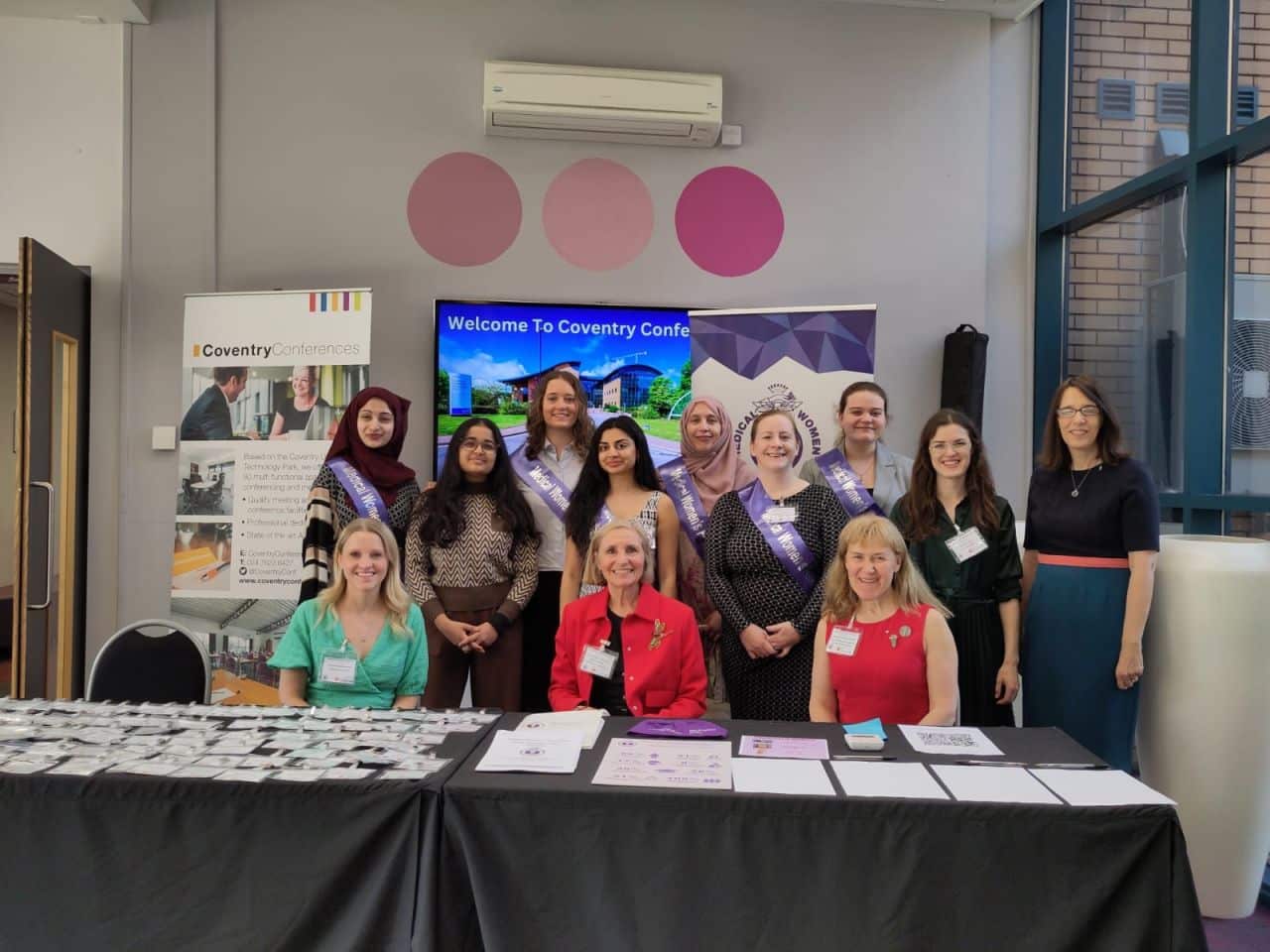
- Fig. 1 Prof Dame Jane Dacre (centre) and Prof Scarlett McNally (right)
The NHS Medical Education and Training Review (METR) – an opportunity to make a difference for the doctors of the future
There have been problems with postgraduate medical training and education in the UK for many years now. Despite at least three reviews, and several attempts to improve the lot of specialty doctors and doctors in training, significant concerns have continued. This prompted a diagnostic review https://www.england.nhs.uk/medical-education-and-training-review/ which was published almost a year ago. There were 11 recommendations, which were well received:
- Reform urgently
- Address bottlenecks
- Increase flexibility
- Reduce rigidity between ‘training’ and ‘service’
- Review rotations
- Provide a distributed workforce for the whole population
- Support educators
- Make time for procedural skills
- Maintain generalist and enhance digital skills
- Review recruitment
- Develop academic medicine
Phase 2 of the METR was launched in February 2026 and MWF President, Professor Dame Jane Dacre was appointed as the independent chair. Two additional areas that are to be looked at are the changing needs of the workforce related to the increased number of women in medicine and the resulting increase in less than full time working, as well as low morale amongst young doctors. Reform is urgent.